The answer is rarely to add furniture to every available wall. The most effective small bedroom storage ideas begin by identifying exactly what needs to be stored, then choosing one well-proportioned piece that solves that particular problem.
By making better use of height, hidden storage and overlooked areas of the room, you can create a bedroom that feels calm, considered and practical without compromising on style.
Last Updated: 15/08/2026
Contents
How to Maximise Storage in a Small Bedroom
Use Vertical Storage When Bedroom Floor Space Is Limited
Use a Storage Ottoman for Bedding Storage
Choose a Bedroom Armoire Instead of Several Smaller Pieces
Choose a Bedside Table with More Storage
How to Make Bedroom Storage Feel Less Cluttered
Bedroom Alcove Storage Ideas for Awkward Spaces
Choose Small Bedroom Furniture with a Lighter Visual Weight
How to Make a Small Bedroom Feel Larger
A Simple Small Bedroom Storage Plan
Frequently Asked Questions
How to Maximise Storage in a Small Bedroom
Before choosing new furniture, identify the specific problem you are trying to solve. Do you need more hanging space, or are folded clothes filling every available drawer? Is spare bedding taking up too much room in your wardrobe? Are several small storage pieces occupying more floor space than one larger piece would?
It is also worth considering whether the problem is storage capacity or furniture placement. A generous chest of drawers may provide plenty of space but still feel impractical if it narrows the walkway around the bed. A tallboy placed in a narrow alcove may provide similar capacity while leaving more of the room open.
Start by separating the items you need to store into simple groups, such as clothing, bedding, accessories and bedside essentials. This will help you decide whether you need drawers, hanging space, hidden storage or a combination of all three.
For a complete introduction to armoires, ottomans, chests and other furniture types, read our guide to bedroom storage solutions and organisation.
Use Vertical Storage When Bedroom Floor Space Is Limited
When floor space is restricted, one of the simplest ways to maximise bedroom space is to use the height of the room.
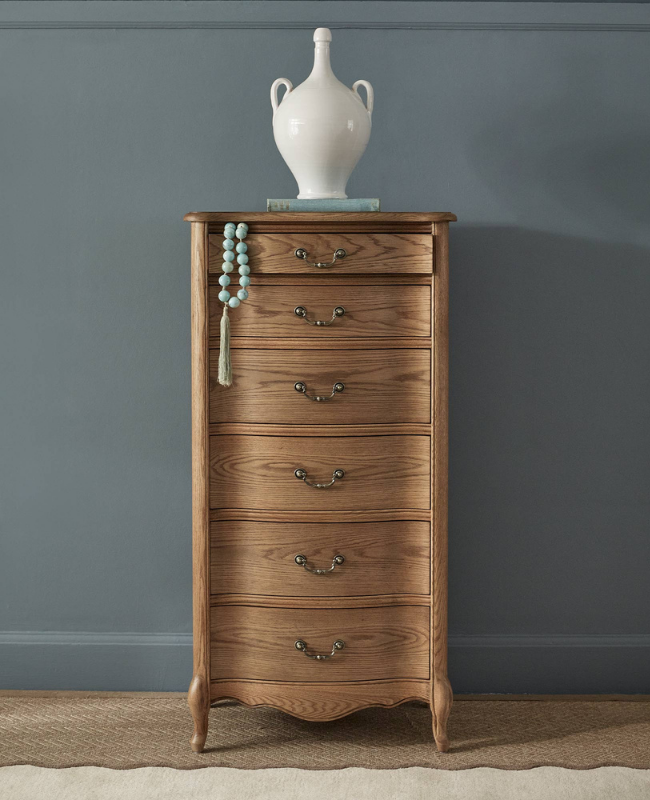
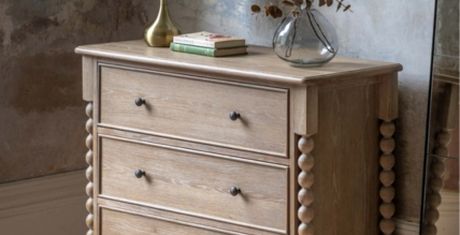
A tall chest of drawers offers generous storage while using less wall width than a traditional low chest. This makes vertical bedroom storage particularly useful in narrow rooms, smaller guest bedrooms and spaces with limited uninterrupted wall space.
The Love Story Tallboy Chest works well in a narrow alcove or against a slim section of wall. Its taller shape provides practical drawer space without introducing the width and visual weight of a larger chest.
A narrow chest of drawers can also be useful where a standard chest would interrupt movement around the room. Rather than filling a wall with several low pieces, one tallboy storage piece can create a calmer and more cohesive result.
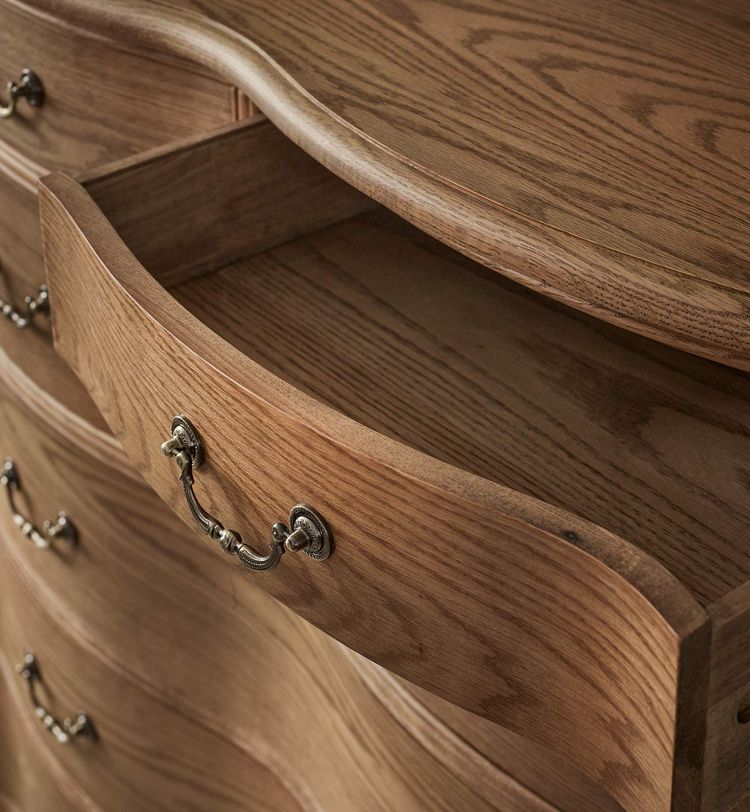
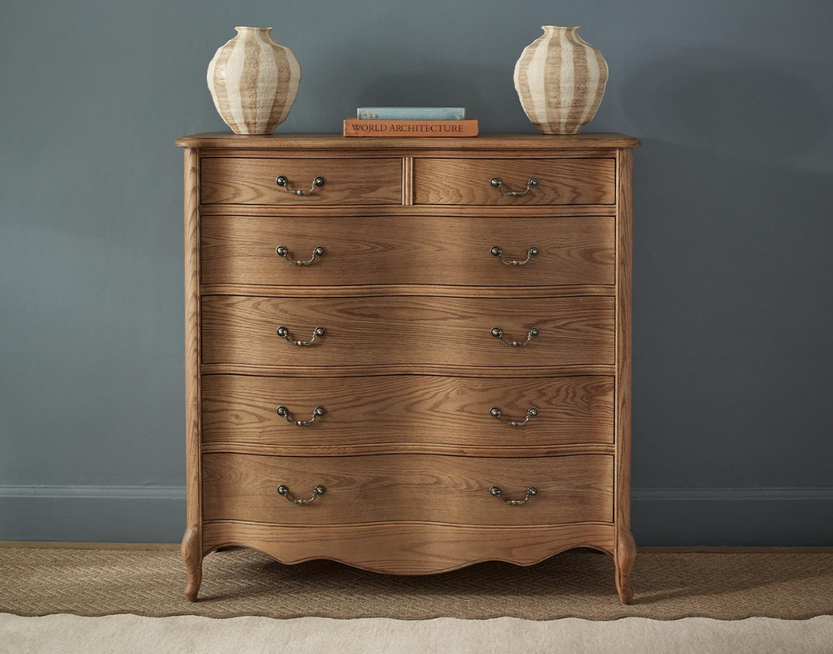
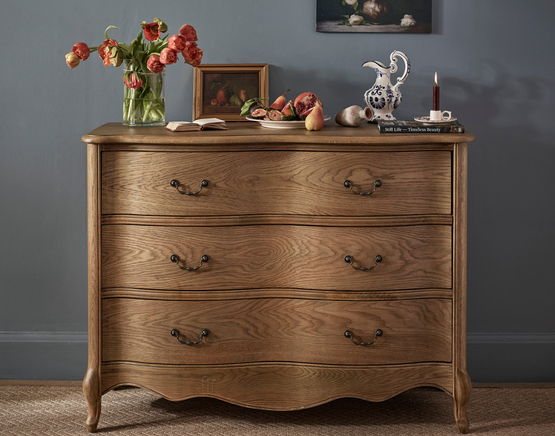
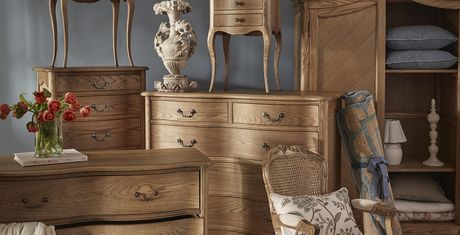
It is important to compare capacity rather than simply counting pieces. A six-drawer chest may offer considerably more storage than a three-drawer chest while occupying a similar amount of wall space. The Love Story Curved Six Drawer Oak Chest of Drawers can therefore be a more efficient choice than several smaller cabinets.
Before choosing tall bedroom storage, check the ceiling height and consider how the piece will sit alongside the bed and surrounding furniture. It should feel proportionate to the room rather than squeezed into the available space.
Is a Tallboy Better Than a Chest of Drawers?
The right choice depends on how you use the room and what you need to store.
A tallboy is a practical option where floor space is limited, as it offers plenty of drawer storage within a narrower footprint. It can work particularly well in an alcove or on a smaller section of wall, although its higher drawers may be less convenient for everyday items and its top surface is usually more limited.
A wider chest of drawers requires more wall space but keeps the contents within easier reach and provides a generous surface for a mirror, lamp or decorative accessories. Its broader drawers can also be useful for larger folded items such as knitwear or bed linen.
In simple terms, choose a tallboy to make better use of height, or a wider chest if easy access and surface space are the greater priority.
Use a Storage Ottoman for Bedding Storage
Spare duvets, pillows, bed linen and throws can be difficult to store because they require volume rather than lots of small compartments.
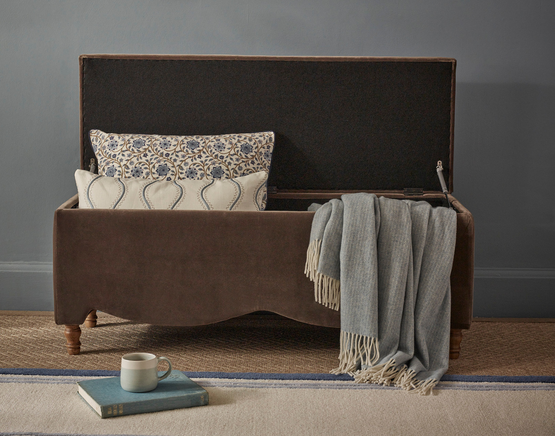
The foot of the bed is often an underused area and can provide an ideal place for small bedroom bedding storage. A storage ottoman keeps bulkier items close at hand while helping the rest of the bedroom remain clear.
A bedroom ottoman can be used to store:
Spare duvet covers and pillowcases
Seasonal duvets
Additional pillows
Blankets and throws
Towels
Less frequently worn clothing
Books and precious belongings
Before placing a storage ottoman at the foot of the bed, make sure there is enough space to walk around it comfortably. You should also check that the lid can open fully without meeting the bed frame or nearby furniture.
An ottoman can provide occasional seating when dressing or putting on shoes, making it one of the most useful pieces of furniture for small spaces. It may also work beneath a window, in a dressing area or in a hallway where proportions and access allow.
Our deep velvet storage ottomans offer hidden bedding storage while adding softness and texture to the bedroom.
Choose a Bedroom Armoire Instead of Several Smaller Pieces
Several small storage pieces can make a bedroom feel more crowded than one larger, well-chosen item. A clothes rail, shelving unit and compact chest may all provide useful storage, but together they create more visual interruption. Where space allows, replacing them with one hardworking bedroom armoire can create a calmer and more organised result.
For those considering small bedroom wardrobe ideas, a freestanding armoire can be one of the most practical wardrobe alternatives. It is particularly useful where there are no fitted wardrobes or where built-in storage would be unsuitable for the room.
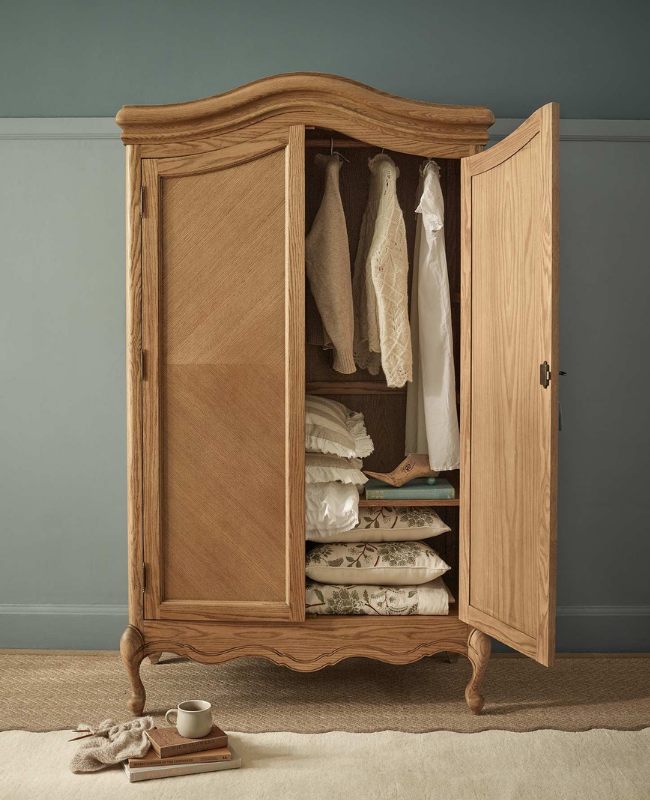
Look for an armoire that combines hanging space with shelves or drawers so that folded and hanging clothes can be stored together. Position the armoire against the largest uninterrupted wall where possible. Avoid placing tall furniture close to a window if it will restrict natural light or make the room feel enclosed.
You should also allow sufficient room for the doors to open and make sure the armoire does not narrow the main route between the bed and doorway.
Can an Armoire Work in a Small Bedroom?
An armoire can work very well in a small bedroom when it replaces other furniture rather than simply adding another large piece to the room.
The most effective position is usually against the longest uninterrupted wall, or on the same wall as the bedroom door so that it sits outside the room’s main sightline. This can help keep the view from the doorway feeling more open. Allow enough space in front for the doors to open fully and for you to move around comfortably.
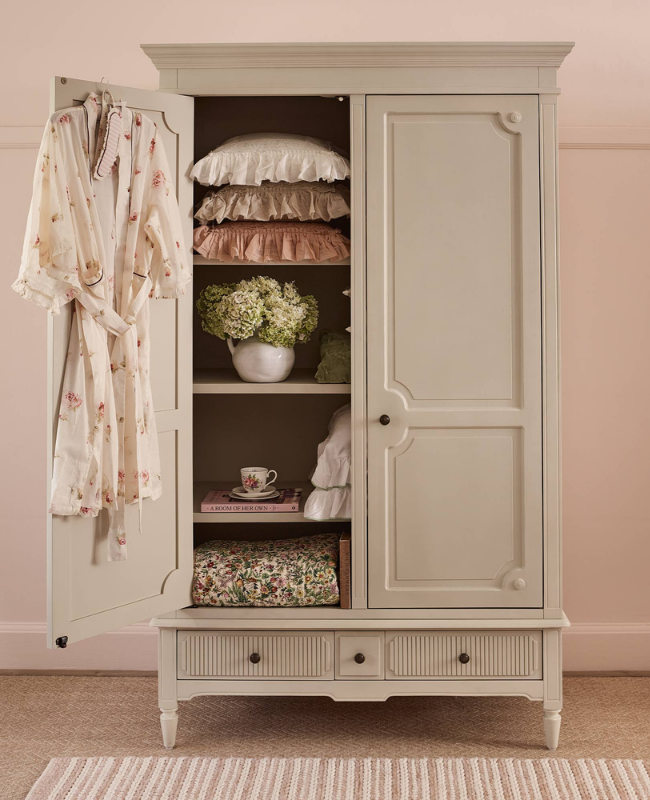
Choose an armoire with both hanging space and internal shelving so it can take the place of a separate wardrobe and chest of drawers. The shelves can be used for folded clothing, accessories or even a small collection of cosmetics, reducing the need for additional furniture elsewhere in the room.
Its finish can also affect how dominant it feels. A pale painted armoire or one in a tone close to the surrounding walls will sit more quietly within the space, while closed doors keep clothing and everyday items out of sight.
The key is to treat the armoire as the bedroom’s main storage piece. When it consolidates several functions into one well-positioned cabinet, it can make a small room feel calmer rather than more crowded.
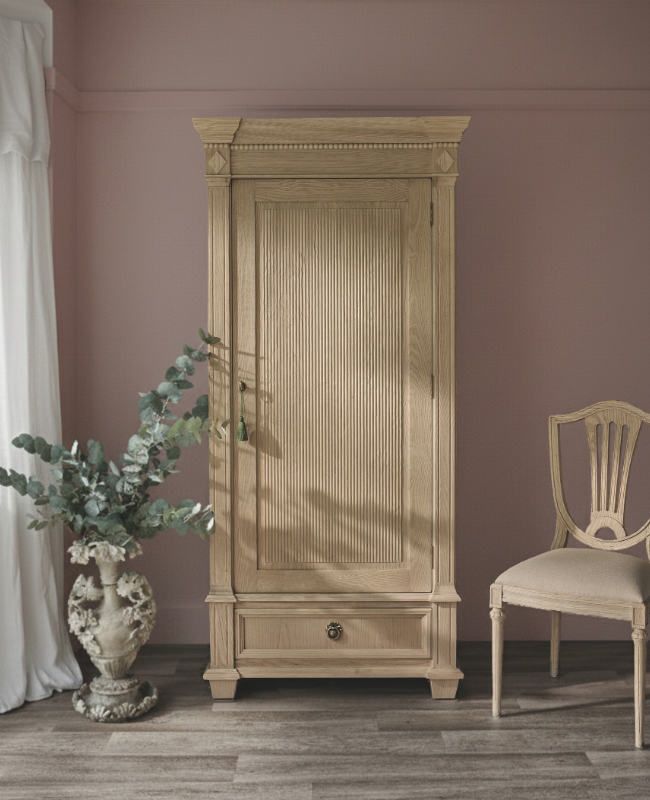
Explore our collection of French armoires and wardrobes to find designs suited to different room proportions and storage needs.
Choose a Bedside Table with More Storage
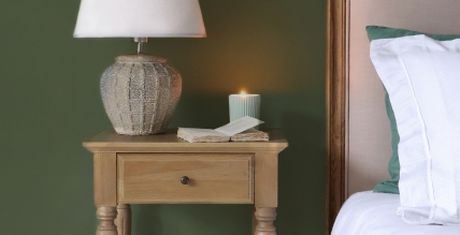
Bedside tables occupy valuable floor space, so they should provide more than a surface for a lamp and glass of water. If your current bedside table has little or no storage, replacing it with a cupboard-style cabinet or multi-drawer design can make a noticeable difference to small bedroom organisation.
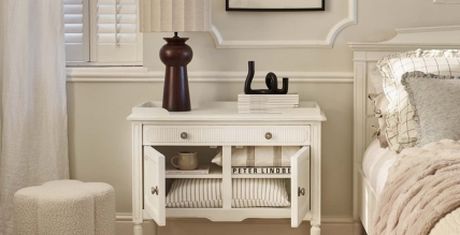
The Douceur Bedside Cabinet offers concealed cupboard storage, making it useful for larger items that might otherwise remain visible. A three-drawer bedside table can help organise smaller essentials such as books, reading glasses, hand cream and charging cables.
The Gustavian Bedside Cabinet also features a retractable pull-out shelf, providing additional space when needed without permanently increasing its footprint.
Where there is no room for both a bedside cabinet and a separate chest, consider using a compact chest of drawers beside the bed. It can perform both functions while reducing the overall number of furniture pieces in the room.
Wall lights can free up further space by removing the need for table lamps. This leaves the bedside surface clearer and can make a narrow gap beside the bed feel less crowded.
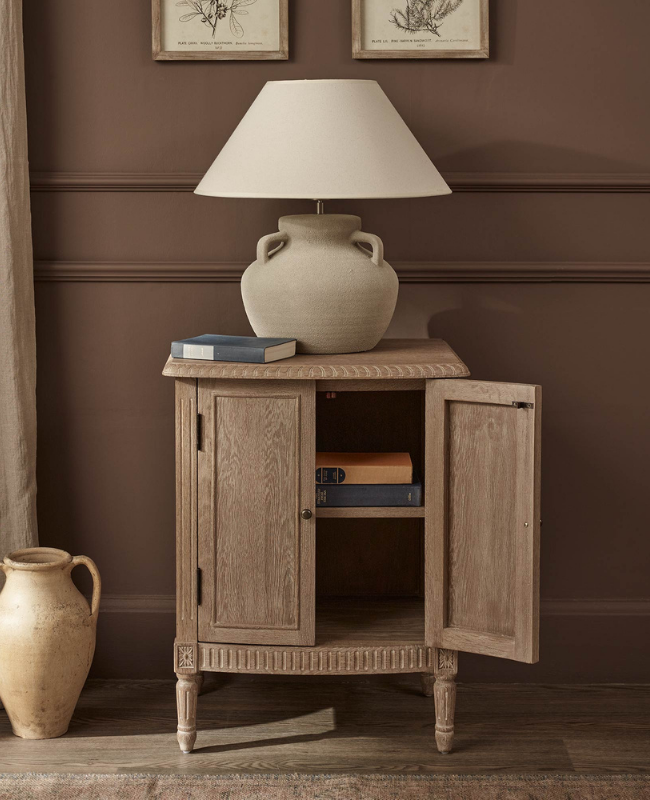
For more guidance, read our article on how to style French bedsides and cabinets and how to organise a cluttered bedside table efficiently.
How to Make Bedroom Storage Feel Less Cluttered
Storage furniture should reduce visual clutter rather than add to it. A collection of small baskets, rails, shelves and cabinets may technically provide plenty of storage, but it can also make a bedroom feel busy. Closed storage creates a more restful atmosphere by keeping everyday items out of sight.
Consider replacing:
A clothes rail, shelving unit and small chest with one armoire
Two low drawer units with one tallboy
Several small cabinets with one higher-capacity chest
It is not necessary to fill every wall. Leaving selected areas visually clear gives the eye somewhere to rest and can help the bedroom feel more spacious. Try to group storage furniture thoughtfully rather than distributing it around every corner. One statement piece will often feel calmer than several smaller units competing for attention.
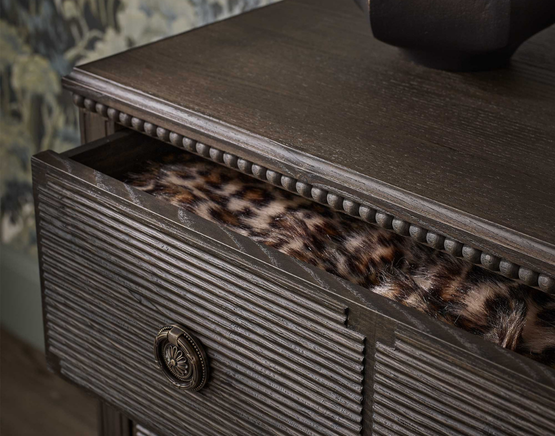
The finish of the furniture also affects its visual weight. Pale wood, softly painted finishes and lighter upholstery can reflect natural light, while furniture raised from the floor may feel less solid.
Darker or deeper furniture can still work in a limited space, but it should be balanced with lighter walls, restrained accessories and enough room around it.
Bedroom Alcove Storage Ideas for Awkward Spaces
Chimney breasts, sloping ceilings and narrow alcoves can make furniture placement more difficult, but they can also reveal useful storage opportunities. The key is to consider what each area can realistically accommodate rather than trying to fill every available gap.
Begin by measuring the full width, height and depth of the space, including skirting boards and any changes in the wall line. Check that drawers or doors will be able to open fully and that the furniture will not block a radiator, plug socket or natural light.
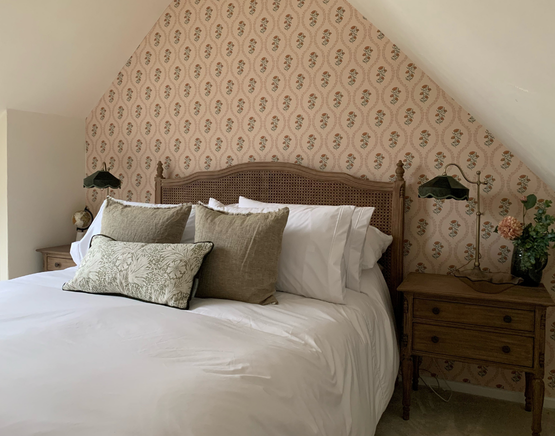
Narrow recesses are often better suited to taller storage, such as a tallboy chest, while the areas beside a chimney breast may accommodate a shallower chest of drawers or bedside cabinet. Space beneath a window can sometimes be used for lower furniture, provided it does not obstruct curtains, shutters or access to the window itself.
Not every alcove needs to contain furniture. Leaving an awkward corner clear can improve movement and make the room feel more balanced, particularly if the surrounding walls already provide sufficient storage.
Choose Small Bedroom Furniture with a Lighter Visual Weight
Furniture does not need to be especially small to work in a limited bedroom, but it should feel proportionate to the space and leave clear routes around the bed.
Pieces raised on slender or tapered legs can help the room feel more open by allowing more of the floor to remain visible. Furniture with a lighter silhouette, softly curved edges or open French detailing can also feel less imposing than solid, box-like designs of the same dimensions.
Proportion is equally important. Very small furniture is not always the best choice for a small bedroom. A piece that is too slight may provide little useful storage, leading to more furniture being added later. Choose the largest piece the room can comfortably accommodate, rather than the largest piece that will technically fit.
Look for furniture that performs more than one role. A storage ottoman can hold spare bedding while providing occasional seating, while a chest of drawers can replace a bedside table when there is not enough room for both. A tallboy uses vertical space to provide useful drawer capacity without occupying a wide section of wall.
The number of pieces matters as much as their size. One thoughtfully chosen chest or armoire will often feel calmer than several compact units placed around the room. By prioritising useful capacity, a lighter visual profile and multifunctional design, small bedroom furniture can provide practical storage without making the space feel crowded.
How to Make a Small Bedroom Feel Larger
Careful furniture choices can help a bedroom feel more open, even when storage is limited.
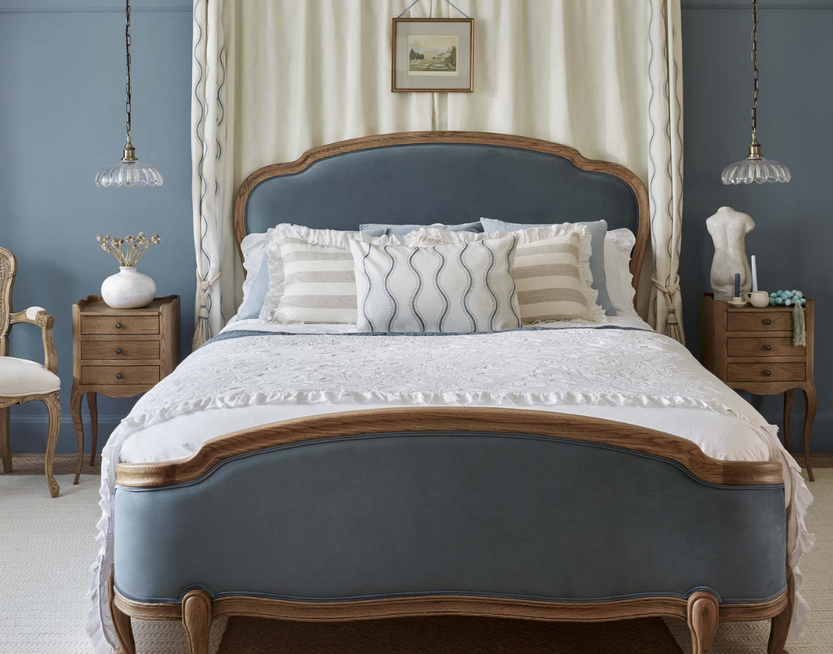
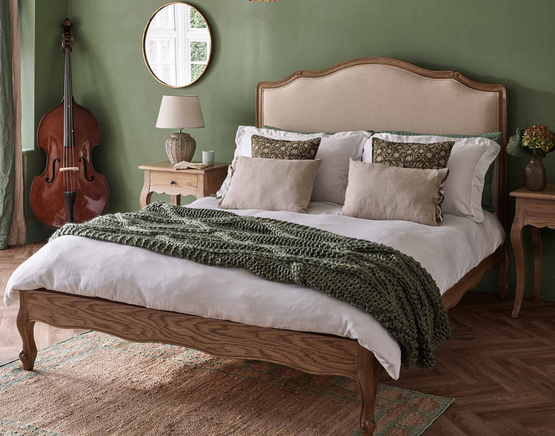
A bed with a low footboard allows the eye to travel through the room and creates a clearer view from the doorway. Rattan and open-detail headboards can also feel less visually solid than fully upholstered or heavily framed designs.
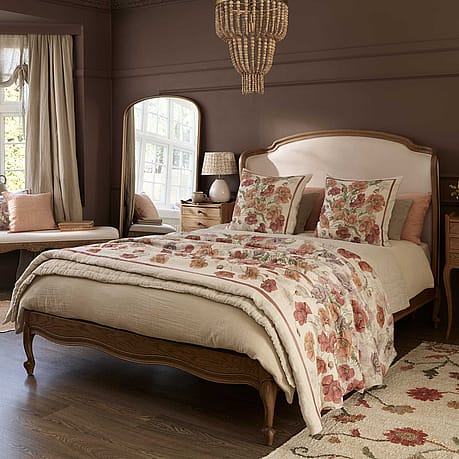
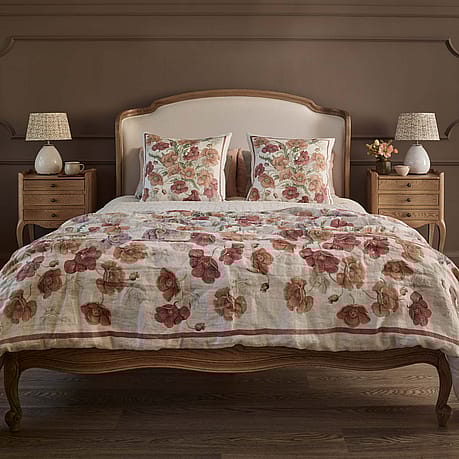
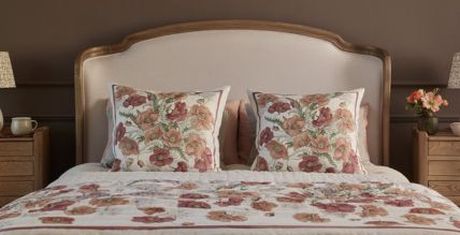
Pale woods, light painted finishes and soft neutral upholstery can reflect light around the room. This does not mean that furniture for small bedrooms must be plain or minimal. Pattern, colour and decorative detail can still be introduced through bed linen, cushions, artwork and smaller accessories.
Mirrors can create a greater sense of depth. Position a wall mirror where it can reflect daylight or an open area of the room rather than a crowded corner.
Try to create one clear focal point, such as a well-proportioned statement bed, rather than filling the room with several competing decorative pieces.
Other ways to help a bedroom feel larger include:
Keeping the area around windows clear
Using wall lights instead of table lamps
Choosing furniture in related tones
Limiting the number of freestanding storage pieces
Maintaining a clear route around the bed
Keeping selected walls free from furniture
The aim is not to make the room feel sparse. It’s to give each piece enough space to feel intentional.
A Simple Small Bedroom Storage Plan
Before purchasing new furniture, create a plan based on your room and storage priorities.
1. Identify What Needs Storing
Separate clothing, bedding, accessories and everyday essentials so you can see which category requires the most space.
2. Measure the Available Walls
Include alcoves, chimney breasts, ceiling height and the space required for drawers and doors to open.
3. Decide Which Type of Storage Is Missing
Choose between vertical storage, hanging space, hidden bedding storage or more functional bedside furniture.
4. Review Your Existing Furniture
Consider whether low-capacity pieces could be removed or replaced with one more useful item.
5. Choose One Principal Storage Piece
This may be an armoire, a tallboy or a higher-capacity chest of drawers.
6. Add Multifunctional Furniture Where Needed
A storage ottoman or cupboard-style bedside cabinet can provide additional capacity without introducing unnecessary furniture.



Practical Storage Without Compromising on Style
Learning how to make the most of a small bedroom does not mean filling every wall or choosing furniture purely for function.
The most successful small bedroom storage solutions use height, hidden compartments and carefully selected furniture to increase capacity without overwhelming the room.
A tallboy can transform a narrow alcove, a storage ottoman can provide valuable bedding storage, and one well-planned armoire can replace several smaller pieces. Even a bedside table can work harder when it includes drawers, cupboard space or a pull-out surface.
By choosing fewer pieces with the right depth, capacity and visual weight, you can create a bedroom that feels organised, spacious and thoughtfully put together.
The best storage depends on what you need to store and the shape of the room. Tallboys are useful where wall width is limited, armoires provide combined hanging and folded storage, and ottomans are ideal for bulky bedding. Choose furniture that solves a specific problem rather than adding several general storage pieces.
Use vertical storage, choose furniture with greater capacity and make use of underused areas such as the foot of the bed. A tall chest of drawers, hardworking bedside Table or storage ottoman can increase capacity without occupying a large amount of additional floor space.
Yes, a tallboy chest is particularly suitable for narrow bedrooms, alcoves and smaller wall spaces because it uses height rather than width. Check the ceiling height and surrounding furniture to ensure it remains proportionate to the room.
An armoire can work well when it replaces several smaller storage pieces. Place it against the largest uninterrupted wall and make sure there is enough space for the doors to open without restricting movement around the room.
A storage ottoman is one of the most practical options for small bedroom bedding storage. It can hold spare duvets & pillows, blankets, and bed linen while making use of the often-overlooked space at the foot of the bed.
Prioritise closed storage and choose fewer pieces with greater capacity. One armoire or tallboy chest will often create a calmer result than several baskets, rails and small cabinets. Leaving selected walls clear can also help the bedroom feel less crowded.
Beds with low footboards allow the eye to travel through the room, while rattan and open-detail headboards feel less visually solid. Pale wood, light upholstery and a well-proportioned frame can also help maintain a greater sense of space.
)