Last updated: 18.09.2026
Noun: a cupboard or wardrobe, typically one that is ornate or antique. - Oxford English Dictionary
The word armoire is French, derived from the Old French armarie, meaning “cupboard or bookcase”, with its Latin root armarium, meaning “closet for storing implements or tools.” - Vocabulary.com
Few pieces of furniture combine practicality and presence quite like the armoire. Traditionally created to house clothing, linen and household possessions, the armoire has evolved from a purely functional storage piece into one of the most distinctive forms of cabinet furniture.
Tall, generous in proportion and often richly detailed, a well-crafted French armoire brings a sense of permanence to an interior. Carved panels, aged finishes, decorative hardware and graceful silhouettes can give even the most practical storage an architectural quality.
Today, the armoire remains a particularly versatile piece. It can provide considered storage in a bedroom, dressing room or dining room, while its character makes it equally suited to becoming a focal point within a room.
But where did the armoire originate, how does it differ from a wardrobe, and what should you look for when choosing one? From the history of the French armoire to its many styles and uses, here is everything you need to know.
What Is an Armoire?
At its simplest, an armoire is a large, freestanding cupboard or cabinet used for storage. Traditionally associated with clothing and household linens, armoires were designed to conceal their contents behind substantial doors, creating an elegant alternative to open storage.
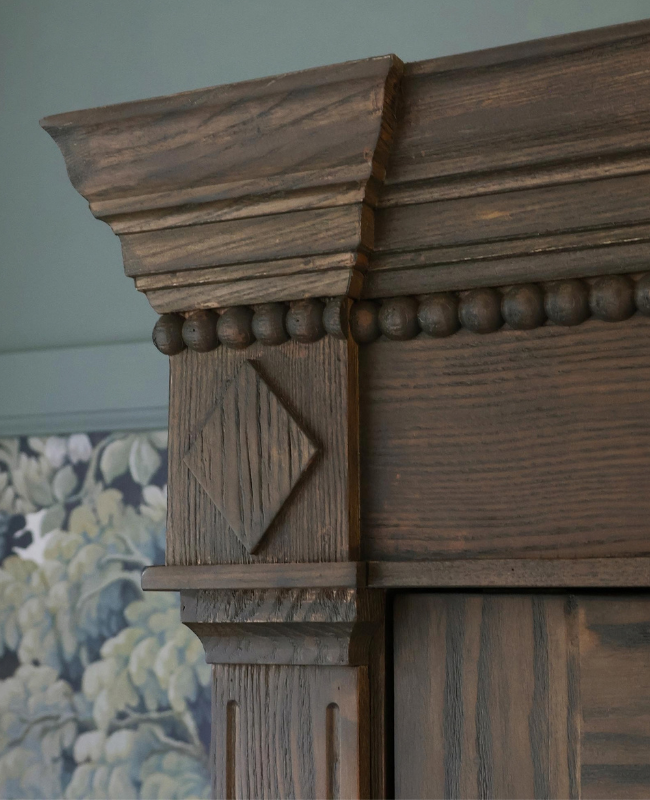
Their construction and detailing, however, are what set them apart. Unlike purely utilitarian cupboards, armoires have historically been treated as pieces of furniture in their own right. Carved mouldings, panelled doors, decorative hinges and handles, turned feet and painted finishes all contribute to their distinctive character.
The interiors can be equally considered. Depending on the design, an armoire may contain hanging rails, shelves, drawers or a combination of these, allowing it to adapt to everything from clothing, bed linen, tableware and treasured possessions.
This combination of useful storage and decorative craftsmanship is central to the enduring appeal of the armoire.
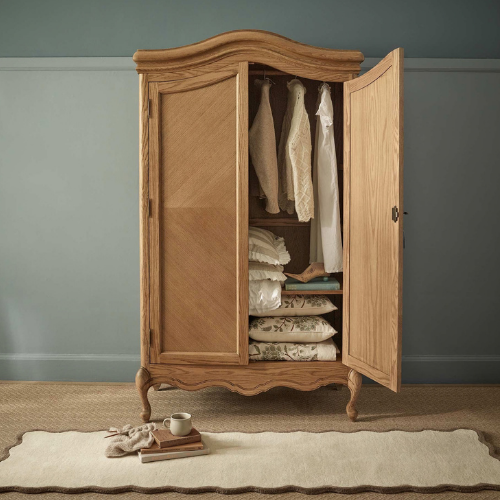
What Is an Armoire Used For?
Although the armoire is most closely associated with the bedroom, its generous proportions and enclosed storage make it remarkably adaptable.
A bedroom armoire might house clothing, spare linen or accessories. In a dressing room, it can complement a wardrobe or chest of drawers, while in a dining room it can provide an elegant home for table linen, crockery and glassware.
The beauty of a freestanding armoire is that it can move with the way a home evolves. Unlike fitted storage, it is not tied to one room or one purpose.
Armoire vs Wardrobe: What's the Difference?
The distinction between an armoire and a wardrobe is not always absolute. In contemporary interiors, the terms are often used interchangeably, particularly when an armoire contains hanging space for clothing specifically.
Traditionally, however, an armoire has a more decorative and substantial character. While the wardrobe developed primarily around the practical storage of clothes, the armoire has its roots in the tradition of European cabinetmaking, where storage furniture was often as carefully considered as any other piece within the home.
An armoire may therefore function as a wardrobe, but its possibilities extend well beyond clothing.
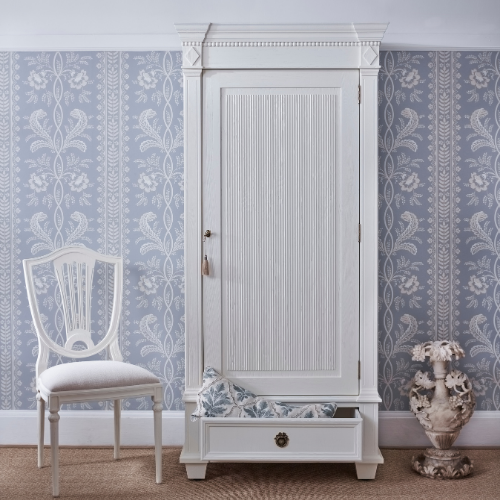
Armoire | Wardrobe |
|---|---|
A substantial, freestanding storage cabinet | Primarily associated with clothing storage |
Often features decorative or architectural detailing | Can be purely functional or decorative |
May incorporate shelves, drawers and hanging space | Typically centred around hanging garments |
Can be used throughout the home | Most commonly found in bedrooms |
Often influenced by traditional European furniture | Available in traditional and contemporary styles |
For those drawn to French interiors, this distinction is particularly relevant. A French armoire combines the practicality of generous storage with the character of a considered piece of furniture.
The History of the Armoire
The story of the armoire is closely connected to the evolution of domestic storage and European craftsmanship.
In medieval times, clothing, tools, weapons and personal belongings were stored in a piece of furniture called presses. Much like a bookcase, these were usually made out of oak and had shelves for storage. Presses were tall and wide, sitting directly on the floor without feet.
As furniture became increasingly sophisticated, enclosed cabinets developed to offer greater protection and organisation, while also becoming an opportunity for craftsmanship and ornamentation.
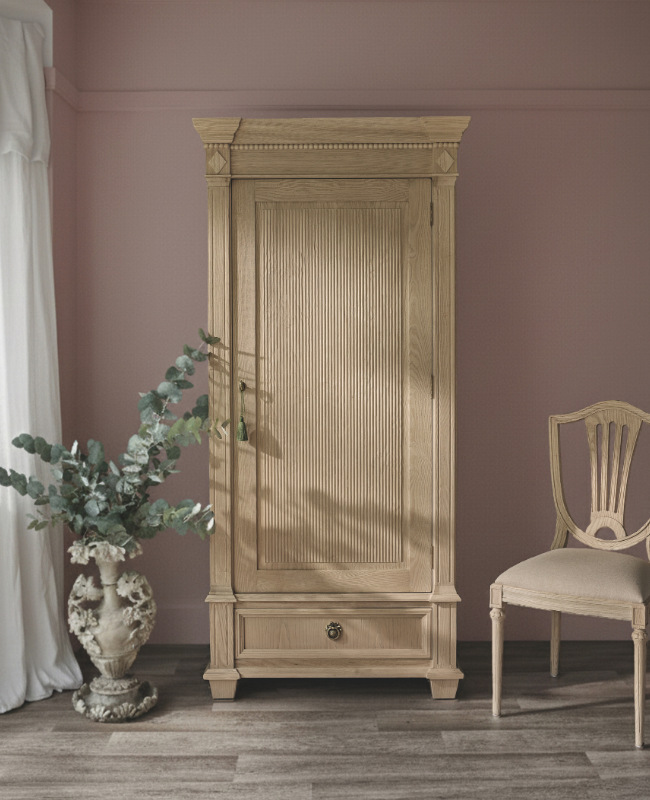
From Practical Storage to Decorative Furniture
By the Renaissance, the armoire had developed into a more recognisable form. Armoires became narrower and taller, with space created for hanging clothes. Cabinetmakers began introducing increasingly elaborate carving, moulding, doors and internal compartments, transforming storage into something worthy of prominence within the home.
Eventually, doors and drawers were added, with elaborate hinges. Armoires were painted inside and out, and sometimes sculpted.
In France, armoires became particularly associated with country houses and chateaux. In French chateaux and castles, armoires became something of a showpiece. Intricately painted and/or carved armoires with extravagant hinges were a sign of wealth and status.
Regional styles emerged, with differences in carving, proportions, wood and painted finishes reflecting the character of their surroundings. Over time, feet were added, and the armoire evolved with the fashions of the time, while always keeping its basic shape and form. The armoire was no longer simply somewhere to put things away. It was part of the room's composition.
The French Armoire
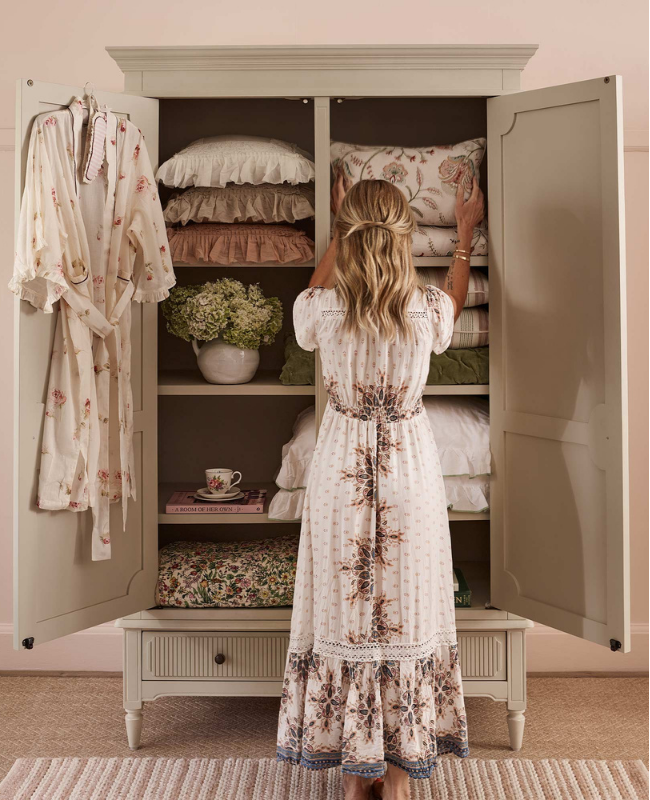
From the restrained elegance of Gustavian-inspired pieces to the more elaborate detailing of chateau furniture, French armoires encompass a remarkable range of styles. Yet the underlying principles remain consistent: generous proportions, considered craftsmanship and a balance between utility and ornament.
Even today, an armoire is considered a piece of furniture that holds great value and is often passed down through generations as an heirloom. It is this sense of history that continues to make the armoire so compelling today. Unlike built-in storage, an armoire has a presence of its own. It can introduce texture, architectural interest and a sense of heritage to an otherwise contemporary room.
Armoire Styles
There is no single definition of what a French armoire should look like. Some are deliberately restrained; others embrace elaborate carving and decorative detail.
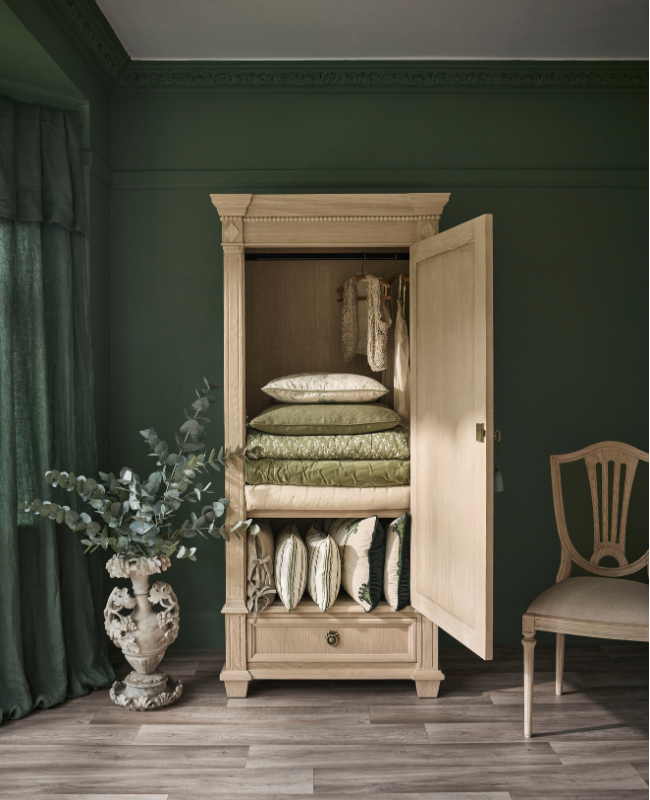
Solid Wood Armoires
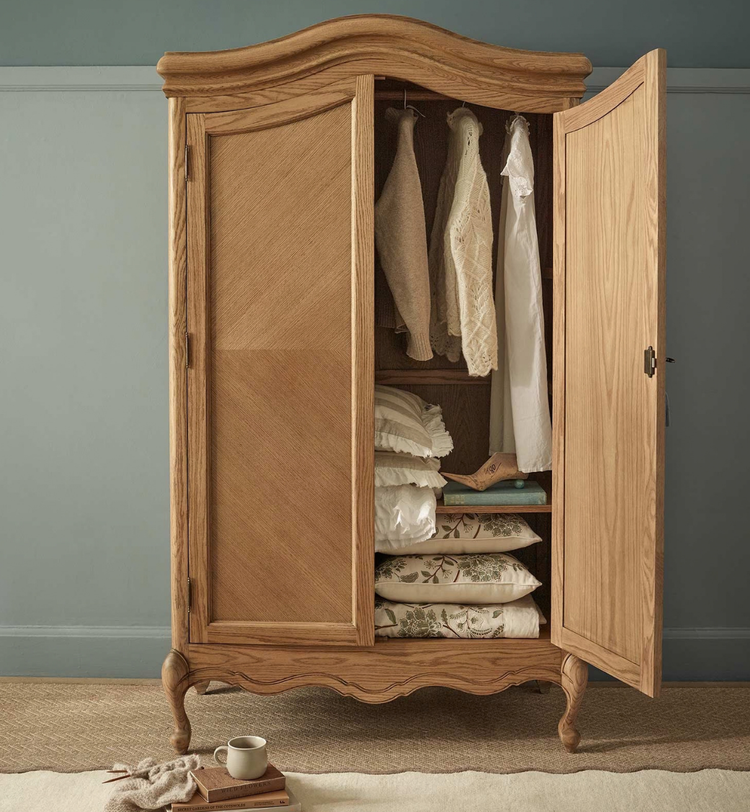
Natural wood brings warmth and depth to an armoire, allowing the material and craftsmanship to take centre stage. The grain, joinery and carved details become part of the design, making each piece feel grounded and enduring.
A wooden armoire works particularly well in interiors where natural materials, antique accents and understated decoration create a sense of quiet sophistication.
Painted Armoires
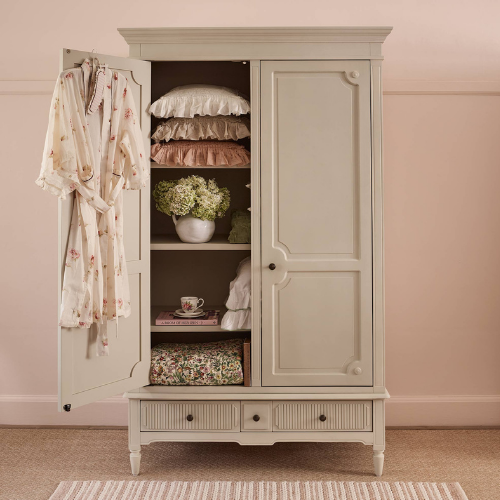
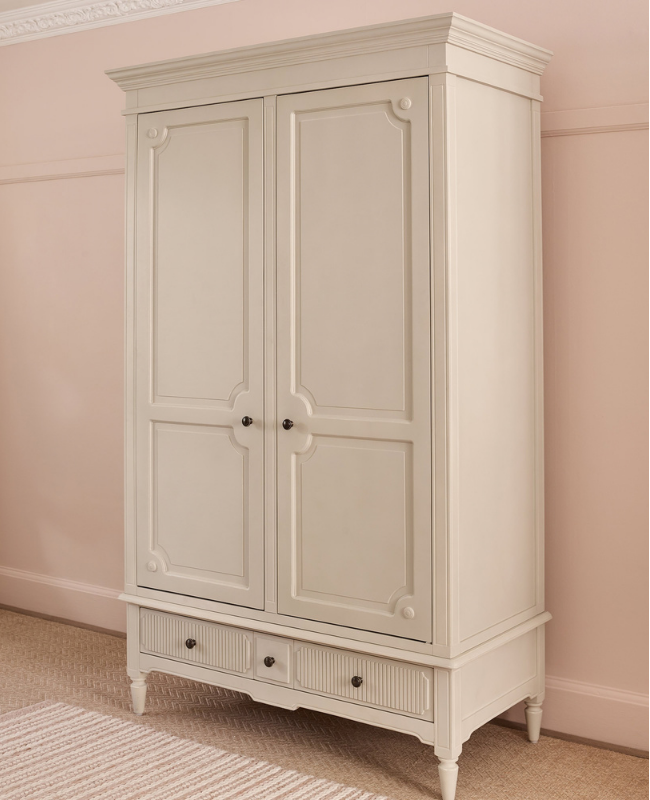
Painted finishes lend an armoire a softer, more relaxed character. Chalky neutrals, warm whites and muted tones complement French country and Gustavian interiors particularly well, while also allowing carved details and architectural lines to remain visible.
A painted armoire can feel as though it has belonged in a room for generations, particularly when paired with linen, aged woods and other tactile materials.
Armoires with Shelves & Drawers
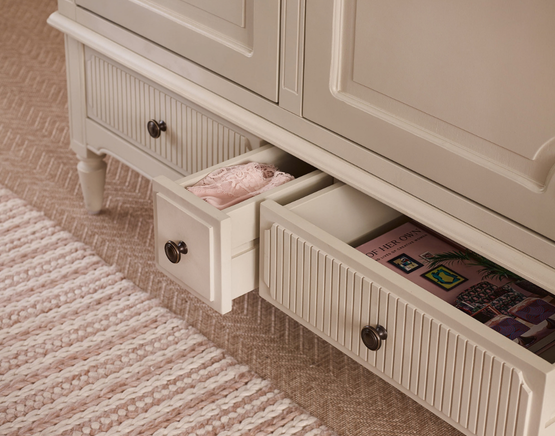
The interior of an armoire is just as important as its exterior. Shelves and drawers provide flexibility for folded clothing, linen and smaller possessions, while hanging rails allow an armoire to function as a traditional wardrobe.
Consider how you intend to use the piece before choosing its configuration. The most successful storage is both beautiful and quietly practical.
Mirrored Armoires
A mirrored armoire introduces another layer of functionality, reflecting light while providing concealed storage. The reflective surface can be particularly effective in a bedroom or dressing room, where it can add luminosity without requiring another freestanding mirror.
Wire-Fronted Armoires
Wire-fronted designs offer a lighter interpretation of the traditional armoire. Their open character makes them particularly suited to displaying carefully folded linen, tableware or other collections, while still providing the structure and presence of a substantial cabinet.
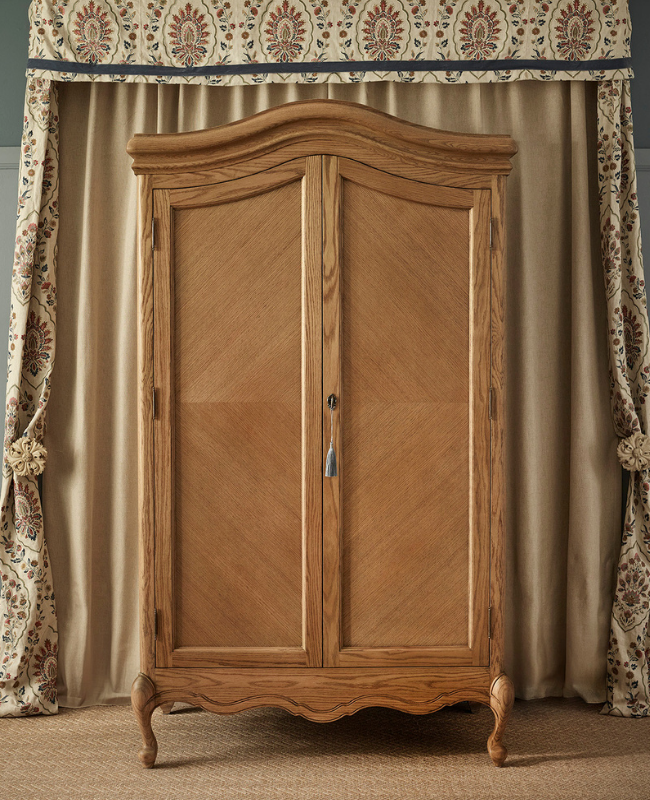
Antique-Style Armoires
For those drawn to the romance of historic interiors, an antique-style armoire can introduce an immediate sense of age and character.
Look for considered details such as carved panels, moulded doors, decorative hardware, cabriole or turned legs and softly aged finishes. These details give a piece the quality of something collected over time, even when it is newly made.
Where Can an Armoire be Used?
An armoire brings more than practicality to an interior. With its generous proportions and distinctive detailing, it has the ability to anchor a room, lending an air of permanence, character and quiet grandeur wherever it is placed.
In the Bedroom
An armoire can provide an elegant alternative to more conventional wardrobe storage, particularly in bedrooms where fitted furniture would feel too contemporary or visually heavy. Use it here for clothing, linen, blankets or accessories, depending on its internal configuration.
In a Dressing Room
In a dressing room, an armoire can sit alongside a chest of drawers, dressing table or existing wardrobe, providing additional storage while contributing to the overall character of the space.
In the Living Room
A generously proportioned armoire can bring a sense of grandeur to a living room while discreetly concealing books, games, media equipment or other household belongings.
In the Dining Room
Traditionally, cabinet furniture has played an important role in dining rooms. An armoire can provide an elegant home for table linen, crockery and glassware, with shelves or wire-fronted doors allowing carefully chosen pieces to become part of the room's decoration.
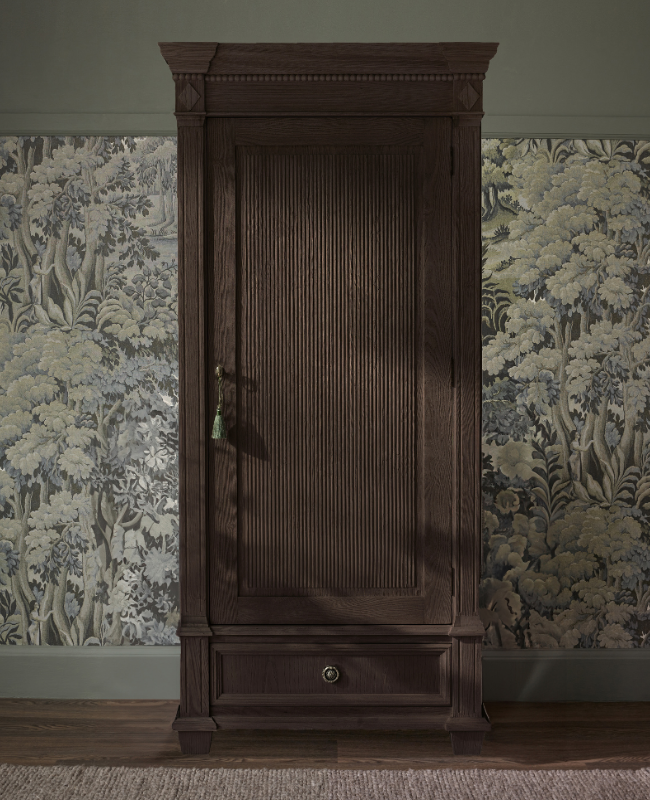
How to Choose an Armoire
Choosing an armoire is as much about proportion and character as it is about storage.
Consider What You Need to Store
Begin with the practicalities. Will the armoire house clothing, linen, crockery or a mixture of belongings? The answer will determine whether you need generous hanging space, shelving, drawers or a combination.
Consider the Proportions
An armoire is an imposing piece of furniture, so proportion matters.
Consider the height and width of the room, the furniture surrounding it and the amount of visual space you want the piece to occupy. A generous armoire can create a beautiful focal point, but it should feel considered within the room rather than overwhelming it.
Consider the Interior
Look beyond the doors. Think carefully about how the internal space is configured and whether it will suit the way you actually live. A beautifully made armoire should be practical as well as decorative.
Choose a Style That Will Endure
Rather than following a fleeting trend, consider the character you want your room to have for years to come or choose a piece that you can pass down to your family for generations to come.
French country, Gustavian, romantic and chateau-inspired interiors can all accommodate an armoire, but the right piece will complement the architecture, materials and existing furniture rather than competing with them.
Consider the Finish
Natural oak brings warmth and texture; painted finishes create a softer impression, while carved detailing and decorative hardware can add a more formal quality.
Consider the materials and finishes already present in your room and choose an armoire that feels as though it belongs within the wider story of the space.
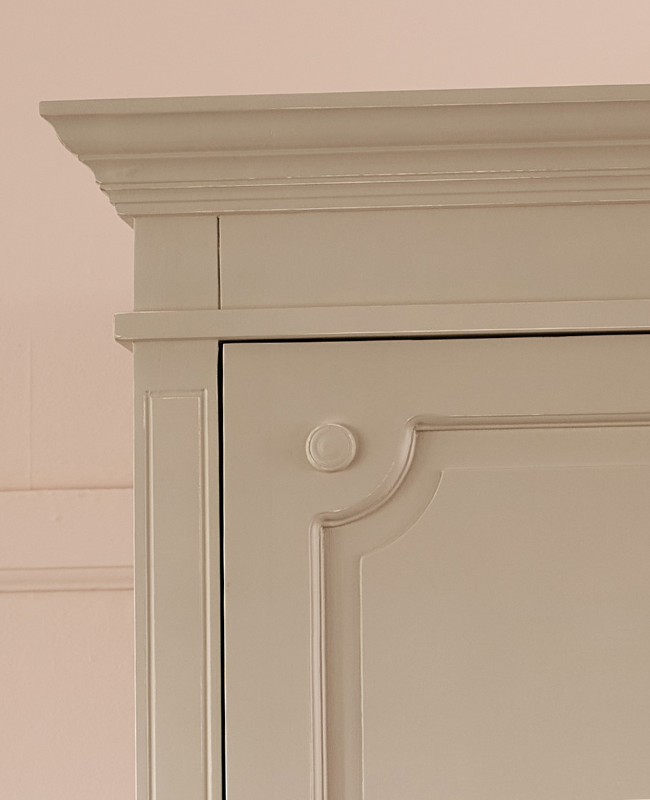
Armoire Dimensions: What to Consider
Before choosing an armoire, measure more than the space where you intend to place it. Consider the height, width and depth of the piece, as well as the clearance required to open its doors and drawers comfortably.
It is equally important to consider the journey the armoire will make into your home. These are substantial, statement pieces and can be larger and heavier than expected, so measure doorways, hallways, staircases and other access points carefully before ordering. Pay particular attention to ceiling height and staircase width to ensure there is sufficient clearance for delivery.
Our armoires are delivered to the ground floor as standard and, in most cases, arrive fully assembled. If you require first-floor delivery, our armoire delivery service is available at checkout for £60. This allows our expert delivery team additional time to unpack and carefully manoeuvre your armoire into its intended position. Please add this service at checkout, or contact our Customer Experience team on 01444 415430 or [email protected] to arrange this service. Find out more information on our website.
For a substantial piece of furniture, a few minutes spent measuring can make all the difference.
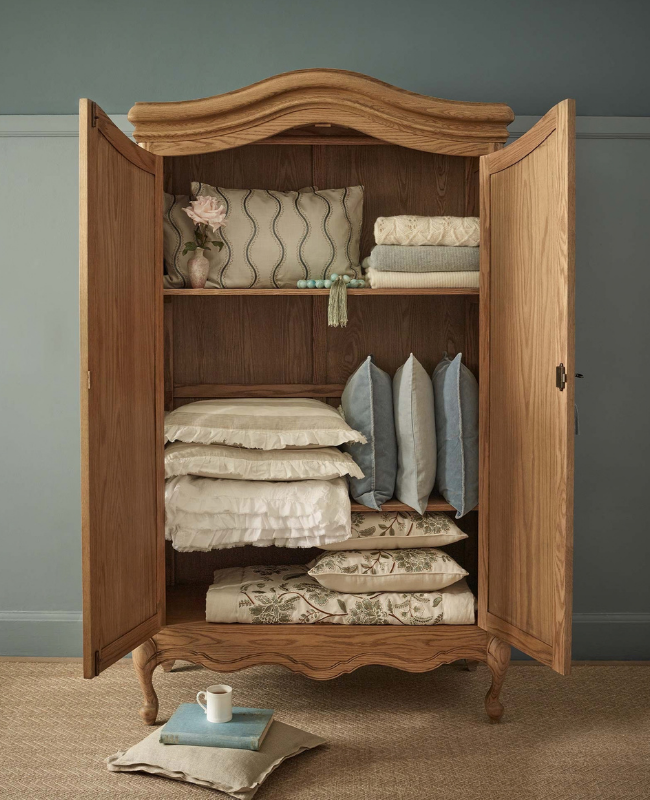
How to Style an Armoire
In a bedroom, pair it with natural linen, soft lighting, an upholstered or carved French bed and carefully chosen accessories. A mirror, artwork or a small collection of objects can bring interest to the top of an armoire without making it feel overworked.
Inside, consider both practicality and presentation. Linen, baskets and folded textiles can create an organised interior while adding softness and texture. For more inspiration, explore our guide which gives you four ways to style an armoire in your home.
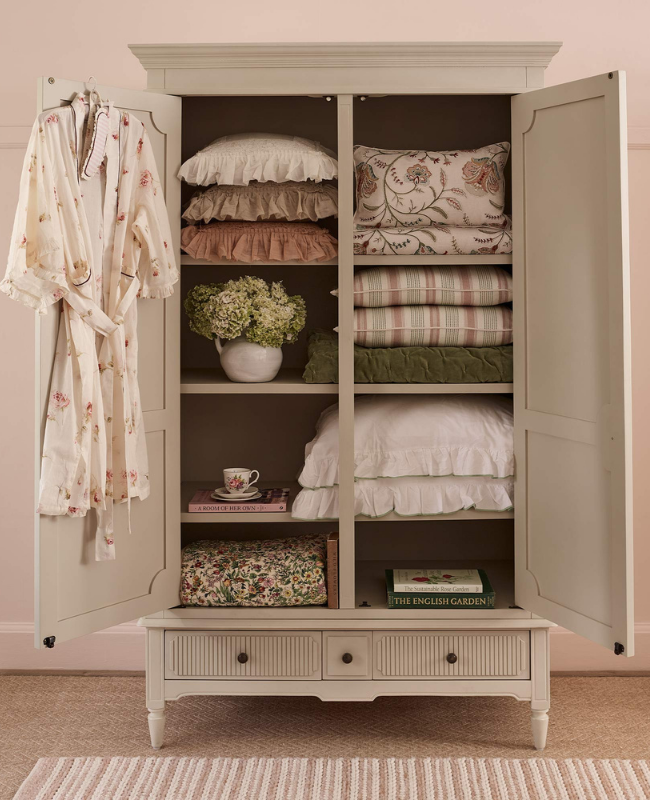
How to Care for an Armoire
A well-made armoire is intended to be lived with and enjoyed for years, and thoughtful care will help preserve its character. Dust carved details and mouldings gently and use cleaning products appropriate to the particular wood or painted finish. Avoid excessive moisture and take care around decorative hardware. Always check product descriptions for more detail and specific care instructions.
For older or antique-style pieces, some of the character lies in the finish itself. Rather than attempting to make every surface look new, gentle care helps preserve the patina and detailing that give the furniture its depth.
Find Your French Armoire
Armoire Delivery & Service
As substantial pieces of furniture, armoires require careful consideration when it comes to delivery as well as dimensions. French Bedroom offers an additional armoire service available at checkout. For full details on delivery options and the service available for your chosen piece, visit our Delivery & Returns page.
Frequently Asked Questions
An armoire is a large, freestanding cupboard or cabinet traditionally used for storing clothing, linen and household possessions. Its design can incorporate hanging space, shelves, drawers or a combination of these.
An armoire can be used to store clothing, bed linen, accessories, crockery, glassware and other household belongings. Although traditionally associated with bedrooms, it can be used throughout the home.
A wardrobe is generally associated with clothing storage, while an armoire is traditionally a larger and more decorative cabinet. However, an armoire can function as a wardrobe when it includes hanging space.
Yes. Many armoires are designed with hanging rails and can provide an elegant alternative to a conventional wardrobe.
Measure the available height, width and depth, allowing sufficient space for doors and drawers to open. You should also measure the route into your home, including doorways, hallways and staircases.
The best storage option depends on what you need to put away. Consider whether you need hanging space for clothing, shelves for folded items or drawers for smaller belongings. For other storage needs, such as a bedside table for treasured possessions or books, explore our guide which will help you choose the right type of storage suited to your home.